Low cortisol aim in Valorant beats hype-driven flicking because calm crosshair placement wins more duels than raw speed
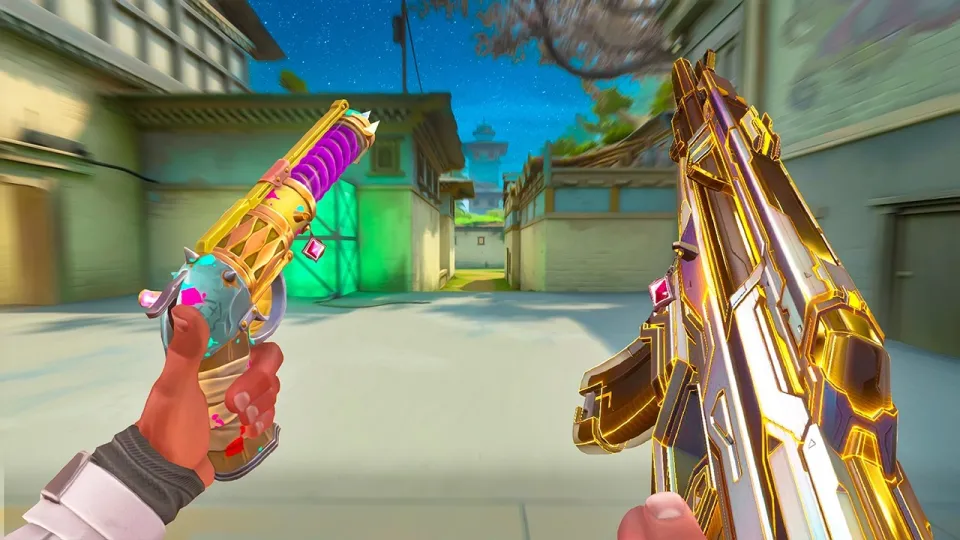
Video: low cortisol aim..
You can order the same kind of articles for your own video to boost it on YouTube and Google. Just message the Telegram bot @sat_sit_bot. It writes articles around your video, embeds the video and publishes them on popular niche websites (no ads). Free trial — 50 articles.
· based on the channel Rawzu
Valorant low cortisol aim is the practice of aiming with a relaxed, low-arousal state instead of chasing fast flicks: you pre-place the crosshair, move only as much as the angle requires, and reset after every shot. It looks slower on stream than highlight-reel aim, but it produces more repeatable duels because it removes the panic that turns a clean one-tap into a spray. Rawzu's calm Phoenix montage is a good reference point for the style, and the creator's own PC optimization link, the Hone.gg Valorant optimization page, is where the setup side of that consistency starts.
What low cortisol aim actually means in Valorant
Low cortisol aim is a low-arousal aiming habit: the player keeps the mouse hand loose, the crosshair at head height, and the decision to shoot already made before the peek happens. The name is a joke about playing without adrenaline, but the mechanics behind it are ordinary and teachable.
Three things separate it from ordinary aim practice:
- Crosshair placement first. The cursor sits where an enemy head would appear, not in the middle of open space, so the flick distance is short or zero.
- Minimal movement. Small wrist adjustments replace wide arm swings; the mouse never travels further than the angle demands.
- Reset after every shot. After a kill or a whiff, the crosshair returns to a neutral head-level position instead of drifting toward the floor or the skybox.
In Valorant this matters more than in most shooters because the time-to-kill is short and the movement penalty is brutal. A player who is calm enough to stop moving before shooting lands the first bullet; a player who is hyped up often fires while strafing and eats the inaccuracy.
Rawzu's Valorant settings and why they support a calm style
Rawzu's published Valorant settings are built for control rather than speed: 400 DPI with 0.625 in-game sensitivity, a 1440x1080 resolution, and the crosshair code 1-6-2-2. That sensitivity works out to a fairly low effective value, which means a full 360-degree turn takes a deliberate arm sweep — the opposite of twitchy high-sens flicking.
The rest of the peripheral list points the same way:
- Mouse: Logitech G Pro X Superlight 2, a light wireless shape that reduces fatigue over long sessions.
- Mousepad: Artisan Zero soft, a control-oriented cloth pad that adds stopping friction, so the crosshair does not overshoot.
- Monitor: Zowie XL2566K at 360Hz, which keeps motion clear during fast peeks.
- Resolution: 1440x1080, a stretched 4:3 format that widens player models and makes heads easier to track.
None of these settings make aim calm on their own, but they lower the physical cost of consistency: a control pad plus low sensitivity means the same hand movement produces the same result every time, which is exactly what a repeatable style needs.
How Phoenix fits the low cortisol playstyle
Phoenix is an offensive duelist whose kit rewards players who take fights on their own terms rather than reacting to chaos. Blaze creates a wall that blocks vision and damages anyone walking through it, so Phoenix can cross open ground without exposing himself to three angles at once. Curveball blinds enemies even when they are tucked behind corners, which turns a blind peek into a pre-aimed duel instead of a guessing game.
Hot Hands adds a molotov that heals Phoenix when he stands in his own fire, and Run It Back gives him a free life if a trade goes wrong. Together these abilities let a calm player force duels, take the first shot with a placed crosshair, and survive the mistake if the read was wrong. That is the practical link between the agent and the aiming style: Phoenix's kit buys the extra half-second that calm aim needs.
A practical routine for training calm aim
Calm aim improves through drills that punish over-movement, not through raw flick speed. A short daily routine covers the fundamentals better than an hour of deathmatch with music blasting.
- Ten minutes of static one-taps in the Range. Stand still, fire one bullet, reset the crosshair to head level, repeat. The goal is zero strafing while shooting.
- Counter-strafe practice. Strafe left, tap the opposite key to stop, then fire. Valorant rewards the stop, not the speed of the strafe.
- Pre-aim angle walks. On a map like Icebox, walk common angles with the crosshair already at head height and never let it drop while moving.
- Deathmatch with a rule. Allow only one burst per engagement; if the first burst misses, disengage and reset instead of spraying.
- Lower the stakes. Keep the mouse hand loose, breathe normally, and treat each duel as a repetition rather than a highlight.
The measurable signal is not flick speed but first-bullet accuracy and how often the crosshair is already on the angle when an enemy appears.
Common questions about calm aim and the video
Viewers of the clip reacted to two things: the movement and the audio. Several comments praised the movement more than the aim, and at least one noted watching at maximum volume on speakers — a reminder that these montages are edited for feel, not as a tutorial. Others joked about the game looking like a different shooter entirely, which is a fair reaction to a stretched 1440x1080 resolution and heavy editing.
The recurring doubts are worth answering directly:
- Does low sensitivity equal calm aim? No. Low sensitivity makes over-flicking harder, but calm aim is a decision habit; a high-sens player can pre-aim just as well.
- Is a control mousepad necessary? It helps stopping power, but the Artisan Zero soft is a preference, not a requirement.
- Can Phoenix mains play this way in ranked? Yes, but the kit demands discipline: Run It Back tempts players into reckless entries that no amount of calm aim fixes.
- Do the montage clips represent real ranked play? They are selected highlights, so treat them as a demonstration of the style rather than an average game.
Useful links
- Hone.gg Valorant PC optimization — the creator's own optimization partner link for tuning a Valorant-focused PC.
- Rawzu on Spotify — original music from the channel.
- Rawzu Discord — community server linked in the video description.
Final thoughts on Valorant calm aim
The low cortisol approach is less a secret technique than a set of habits: place the crosshair, stop before firing, take one clean burst, reset. Rawzu's Phoenix footage shows what that looks like when it is polished — low sensitivity, a control pad, a stretched resolution and an agent whose abilities buy the extra moment a calm player needs. If you want to build the same consistency, start with the setup: optimize your PC for Valorant through Hone.gg so frame pacing stops being the variable. The rest is repetition in the Range and the discipline to disengage instead of spraying.
Key takeaways
- Low cortisol aim means stable, low-arousal aiming: minimal unnecessary mouse movement, crosshair held at head level, decisions made before the peek.
- Rawzu's Valorant setup: 400 DPI at 0.625 in-game sensitivity, 1440x1080 resolution, crosshair 1-6-2-2, Logitech G Pro X Superlight 2 on an Artisan Zero soft pad.
- Monitor is a Zowie XL2566K at 360Hz, so frame pacing and consistent high FPS matter more than any single aim trick.
- Phoenix is the agent in the video: Blaze walls block vision, Curveball blinds around corners, Hot Hands and Run It Back make aggressive duels survivable.
- Calm aim is a routine, not a talent: pre-aim, counter-strafe, one clean burst, then reset the crosshair before the next angle.
Source: low cortisol aim.. · Markdown version
Questions & answers
What does "low cortisol aim" mean in Valorant?
It describes aiming in a relaxed, low-adrenaline state: the crosshair is pre-placed at head level, the mouse moves only as far as the angle requires, and the player resets after each shot. The point is repeatability rather than flashy flicks, which is why it often looks slower than highlight clips.
What sensitivity and settings does Rawzu use in Valorant?
Rawzu lists 400 DPI with 0.625 in-game sensitivity, a 1440x1080 resolution, and the crosshair code 1-6-2-2. The peripherals are a Logitech G Pro X Superlight 2 mouse, an Artisan Zero soft mousepad and a Zowie XL2566K 360Hz monitor.
Is a calm aim style viable for a Phoenix main in ranked?
Yes, because Phoenix's kit supports controlled aggression: Blaze blocks sightlines, Curveball blinds enemies behind corners, and Run It Back gives a second life if a duel goes wrong. The risk is that the ultimate encourages reckless entries, so the calm part has to come from the player, not the agent.
Do I need a low sensitivity and a control mousepad to aim calmly?
Neither is mandatory. A lower sensitivity and a control-oriented pad reduce overshoot and make hand movement more consistent, but calm aim is mainly crosshair placement and the discipline to stop moving before shooting. Any reasonable setup can support it with enough deliberate practice.